Potrivit The Guardian,
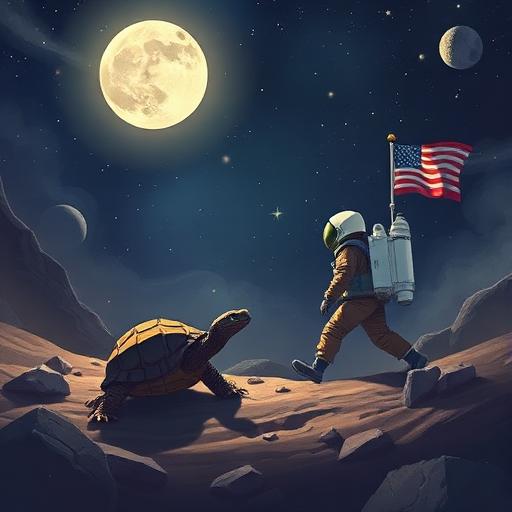
The tortoise and the hare: will China beat the US in the race back to the moon? | Space | The Guardian Skip to main content Skip to navigation Skip to navigation Astronauts wave during a departure ceremony before a rocket launch in 2021 in China, where the one-party system does not allow for changes in government to derail long-term objectives in space. Photograph: Roman Pilipey/EPA The rival superpowers are ramping up preparations for a crewed lunar landing nearly six decades after the first moon walk By Oliver Holmes , and Alastair McCready in Taipei. Graphics by Paul Scruton T he world watched earlier this month as Nasa sent four astronauts around the moon – but to actually land on the surface the US is once again in a space race, this time with China . And China may well win. Both countries plan to build inhabited lunar bases – the first settlement on another celestial body – as well as searching for rare resources and using the deep space environment to test technology for future crewed missions to Mars. The well-funded China National Space Administration (CNSA) is pitted against the US’s National Aeronautics and Space Administration (Nasa). And while Nasa has an advantage from institutional knowledge of having already landed on the moon as part of its Apollo programme, it is attempting to return with just a fraction of the share of the national budget it had in the 1960s. The US space agency is also vulnerable to changes in government every four years, making it hard to stick to decade-long plans – something Chinese rocket engineers working in a one-party state are not affected by. To move ahead at speed, Nasa has outsourced critical mission components to private firms, including billionaire-led ventures aiming to capitalise on the burgeoning space economy. Elon Musk’s SpaceX and Jeff Bezos’s Blue Origin are both rushing to design and build lunar landers in time for test flights next year. Lunar landers from various producers Unlike the race to the moon betwee
Sursa: The Guardian